Spring shows up with sunshine, blooming flowers, and longer days outside…
But for some families, it also brings something else.
More sniffles.
More watery eyes.
More days stuck inside when your child just wants to play.
Maybe you’ve already tried it all, the medications, keeping windows closed, checking pollen counts, limiting time outdoors… and still, it feels like you’re managing symptoms instead of actually getting answers.
And as a parent, that can be really frustrating.
Because you just want your child to feel good in their body and be able to enjoy this season like everyone else.
What we’ve found in our office is that for many kids, there’s a deeper piece of the puzzle that often gets overlooked…
Not just what they’re reacting to, but how their nervous system is processing and responding to the world around them.
You’re Not Alone in This Struggle
Seasonal allergies affect approximately 24 million Americans, including 1 in 4 children, making it one of the most common chronic conditions. But here’s the question no one asks: why do some kids play outside all spring with zero issues, while others are trapped indoors sneezing and struggling to breathe?
Parents like you watch their children miss outdoor playtime, birthday parties at the park, and simple joys like running through the grass barefoot. You’ve become an expert at reading weather patterns and pollen forecasts. Your medicine cabinet is full of antihistamines, nasal sprays, and eye drops. Yet every spring, you’re back to square one.
You’re told this is just how it is—that your child is simply ‘allergic’ and must learn to manage it. But what if I told you there’s a deeper reason why your child’s body is overreacting to harmless pollen? And more importantly, what if there’s a way to address the root cause instead of just masking the symptoms?
The Real Story Behind Allergies
The Nervous System Controls the Immune System
Your child’s immune system doesn’t work in isolation. It’s directly controlled by the nervous system—specifically, by the vagus nerve, which acts like an air traffic controller for immune responses.
When the nervous system is balanced, it sends the message: ‘Pollen is harmless. Stand down.’ When it’s stuck in stress mode (a condition called dysautonomia), it signals: ‘Danger! Attack!’ This triggers the release of histamines and all those miserable allergy symptoms.
The Gut-Immune Connection You Need to Know
Here’s something fascinating: 70-80% of your child’s immune cells originate from gut tissue, and they’re all regulated by that same vagus nerve. When vagal tone is compromised, the gut barrier breaks down. This leads to immune hypersensitivity and overreactions to harmless triggers like pollen.
Think of it like this: your child’s body is trying to protect them, but the alarm system is stuck on ‘high alert’ mode. Everything—even harmless spring pollen—gets flagged as a threat.
What Puts the Nervous System in Overdrive?
The nervous system can become dysregulated through what we call ‘The Perfect Storm‘—a combination of stressors that happen early in life:
Prenatal Stress: When a mother experiences chronic stress during pregnancy, cortisol passes through the umbilical cord to the baby, setting the stage for a sensitized nervous system.
Birth Trauma: C-sections, forceps, vacuum extractions, and prolonged labor can all place stress on the vagus nerve and the developing nervous system.
Early Childhood Stress: Illness, emotional stress, and environmental factors keep the body in a constant state of fight-or-flight.
When the sympathetic nervous system (your child’s stress response) is stuck in overdrive, it’s like a computer with too many tabs open. Eventually, everything crashes. Excessive cortisol weakens immune function and triggers pro-inflammatory responses—even to things as harmless as tree pollen.
Why Medications Aren’t the Answer
Let’s be honest about what antihistamines actually do: they suppress symptoms. They don’t restore health. They don’t address why your child’s body is overreacting in the first place.
Many parents notice that allergy medications cause drowsiness, fatigue, and behavior problems. That’s because these drugs stimulate an already overstimulated nervous system. You’re essentially putting a Band-Aid on a broken alarm system.
The traditional approach—avoiding allergens, staying indoors, managing symptoms—limits your child’s quality of life without fixing the root cause. Your child deserves better than living in a bubble every spring.
There Is a Better Way Forward
What if, instead of suppressing symptoms, you could help your child’s nervous system return to balance? What if their body could learn to recognize pollen as harmless instead of treating it like an invader?
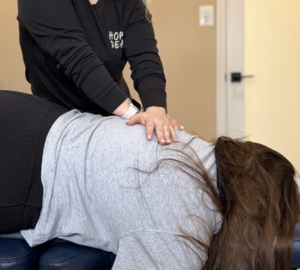
This is where Neurologically-Focused Chiropractic Care comes in. This specialized approach uses advanced technology called INSiGHT scans to identify exactly where subluxation—misalignment and nerve interference—is keeping your child’s body stuck in a stressed state.
Through gentle, specific adjustments, we work to:
- Release stored tension in the nervous system
- Activate the parasympathetic nervous system (your child’s ‘rest and digest’ mode)
- Help the immune system function appropriately without overreacting
This approach doesn’t ‘treat’ or ‘cure’ seasonal allergies. Instead, it rebuilds and restores optimal neurological and immune system function, giving your child’s body the foundation it needs to regulate and adapt naturally.
Your Child Deserves More Than Just “Getting Through” the Season
If your child finds themselves stuck in the cycle of seasonal allergies, missing out on outdoor play, and relying on medications that only seem to manage things temporarily… we want you to know, you’re not alone in this.
And more importantly, there is another way to look at what’s going on.
From what we see in our office, many of these patterns aren’t because something is “wrong” with your child, but because their nervous system has been under stress and isn’t able to adapt and regulate the way it’s meant to.
When we begin to support and calm the nervous system, we often start to see shifts…
Kids handling the environment better
Less reactivity
More ease in their bodies
More freedom to just be kids again
It doesn’t happen overnight, but it does happen with the right support.
Because your child was designed to adapt, regulate, and thrive!
And you deserve answers that go deeper than just managing symptoms year after year.
What Getting Started Can Look Like
If you’re feeling curious about what this could look like for your child, we’re here to walk you through it.
Our initial visit includes advanced INSiGHT scans that help us understand how your child’s nervous system is functioning and where it may need support. From there, we create a personalized plan based on what their body is telling us. Read more here on what that process looks like or reach out to us today to get started!