If sleep has been a struggle in your home, you’ve likely tried so many different things…
Earlier bedtimes
Blackout curtains
White noise
Supplements
Sticking to a consistent routine night after night
You’ve been intentional. You’ve been consistent. You’ve been doing everything you can to help your child.
And still… bedtime feels like a battle.
Your child is exhausted, but somehow also wide awake, unable to fully settle.
If that’s your reality right now, we just want you to hear this first
You are not doing anything wrong.
And your child isn’t being difficult.
What we often see in these situations is a nervous system that’s having a hard time shifting into that calm, restful state needed for sleep.
Because sleep isn’t just about routines, it’s about regulation.
When the nervous system is stuck in a more “on edge” or protective state, the body can feel tired but not able to fully power down.
The encouraging part is… this is something we can begin to support and change.
Did you know? About 1 in 3 children in the U.S. aren’t getting enough sleep, so if this is something your family is navigating, you’re truly not alone.
Sleep Is Not Just Rest — Here’s What It’s Actually Doing
Most parents think of sleep as downtime. In reality, sleep is one of the most active, productive periods of your child’s entire day. While your child sleeps, their body and brain are working hard.
Here’s what’s happening beneath the surface every single night:
- The brain sorts and consolidates everything your child learned that day, strengthening neural connections and filing away memories
- Growth hormone spikes during deep sleep — your child is literally growing while they rest
- The immune system produces infection-fighting cells, which is why chronically sleep-deprived kids seem to get sick over and over
- The brain processes emotions during REM cycles, meaning those explosive meltdowns and mood swings during the day are often just a nervous system running on empty
- The body repairs tissue, regulates hormones, and restores energy reserves for the day ahead
Sleep isn’t a luxury. It’s the foundation everything else is built on. When your child doesn’t sleep, nothing else works the way it should.
The Real Reason Your Child Can’t Sleep: The Nervous System
Here’s what most sleep advice gets completely wrong: it treats sleep as a habit problem when it’s actually a nervous system problem.
Your child’s nervous system has two modes:
- A “gas pedal” — the sympathetic nervous system — that drives stress, alertness, and the fight-or-flight response
- A “brake pedal” — the parasympathetic nervous system — that signals rest, recovery, and sleep
Sleep only happens when the brake wins. When your child’s nervous system can smoothly shift from “on” to “off,” they drift off to sleep naturally. But when there’s interference in that system — what we call subluxation — the brain and body can’t communicate clearly.
The brake pedal gets overridden by the gas pedal, and your child is stuck in “wired” mode even when they’re completely exhausted.
Think of it like this: it’s like trying to fall asleep after three energy drinks. The body is done — but the system simply won’t allow rest.
No amount of lavender essential oil or gummy melatonin changes that.
How “The Perfect Storm” Disrupts Sleep From the Very Beginning
Many children who struggle with sleep have been fighting nervous system dysregulation since long before they could talk. We call this accumulation of stressors “The Perfect Storm,” and it often starts before birth.
During Pregnancy
Cortisol — the stress hormone — from prenatal stress during pregnancy actually crosses the placenta and alters the baby’s developing stress response system. A mother’s stress during pregnancy can quite literally wire her baby’s nervous system toward chronic alertness.
During Birth
Birth interventions like inductions, forceps, vacuum extraction, C-sections, or manual pulling can create subluxation right where the vagus nerve exits the skull. This includes breech babies. The vagus nerve is the primary pathway through which your child’s nervous system signals safety and rest — and it can be compromised from the very first moments of life.
In Early Childhood
Stressors continue to pile up. Antibiotic use disrupts gut health. Chronic reflux, constipation, and frequent illness put ongoing strain on the nervous system. Each one adds to the burden on a system that was already challenged.
Dysfunction of the autonomic nervous system — called dysautonomia — often shows up first as sleep problems, long before it progresses into other symptoms. Sleep difficulties are frequently the first signal that something deeper is going on.
What Happens When Sleep Problems Go Unaddressed
Chronic sleep deprivation doesn’t just make children tired. It reaches into every part of their development.
- Children with insufficient sleep can present with signs that look identical to ADHD — hyperactivity, impulsivity, and poor attention. Because that is what exhaustion looks like in children. Not calm and sleepy. Wired and reactive.
- The immune system can’t rebuild during poor sleep, locking kids into a cycle: illness → antibiotics → gut disruption → worse nervous system function → worse sleep → more illness
- Memory consolidation breaks down, making learning harder and school feel overwhelming
- Emotional regulation falls apart — those explosive meltdowns aren’t attitude or bad behavior, they’re a depleted nervous system
- Chronic sleep deprivation is strongly linked to depression, because the nervous system doesn’t have the resources to process normal emotional challenges
If your child is struggling in multiple areas — focus, behavior, immunity, digestion — sleep may not just be a symptom. It may be the thread connecting everything.
What Actually Works: Getting to the Root Cause
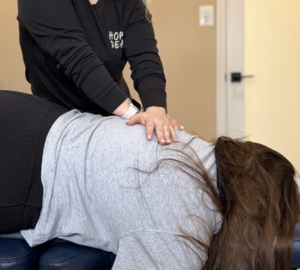
Neurologically-Focused Chiropractic Care takes a fundamentally different approach. Instead of managing symptoms, it addresses the underlying nervous system dysregulation that’s preventing sleep in the first place.
Using precise, gentle adjustments, this care removes subluxation and helps the nervous system adapt — allowing it to finally shift between sympathetic and parasympathetic modes the way it was designed to.
When subluxation is cleared, the vagus nerve can activate properly, initiating and maintaining real sleep cycles. The brake pedal works again.
How We Measure What’s Happening
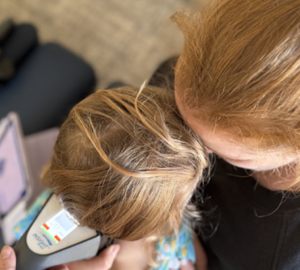
We use INSiGHT scanning technology to measure exactly where interference is happening, how severe the dysregulation is, and which systems are most affected. We are never guessing.
Parents often tell us that sleep improvements come first — followed quickly by better digestion, fewer illnesses, improved behavior, and more emotional resilience. When the nervous system works, everything downstream works better too.
Sleep Is the Foundation
When your child is able to access deep, restful sleep, everything else begins to fall into place… growth, healing, regulation, and overall ease.
If sleep has been a struggle, it’s not something you’ve caused, and it’s not something your child just has to “grow out of.” Often, it’s a sign that their nervous system needs support.
And the good news is, there is a path forward
If you’re ready to look a little deeper and better understand what’s going on for your child, we’d love to help. You can reach out to One Family Chiropractic to get started with INSiGHT scans and a personalized plan of care.
And if you’re not local to us, the PX Docs directory is a great place to find a neurologically-focused chiropractor near you.
Here’s to more restful nights ahead for your whole family