Dear Mama,
You’re doing everything right. The prenatal vitamins, every appointment, reading all the books, and preparing the nursery. But if you’re honest with yourself, you might realize you’re white-knuckling your way through pregnancy. Your shoulders are tight, your jaw is clenched, and no one seems to be addressing the stress you carry in your body every single day.
You deserve more than generic advice to “just relax.” You deserve to understand what’s really happening in your body — and your baby’s — and what you can do about it.
Two Very Different Birth Stories
Let me paint two pictures for you.
Birth Story #1: Mom arrives at the hospital already exhausted from weeks of poor sleep and chronic stress. Labor isn’t progressing “fast enough,” so Pitocin is started. The contractions become overwhelming. An epidural is placed. Hours pass. The baby’s heart rate dips. Suddenly, there’s urgency in the room. Vacuum extraction. Maybe a c-section. Baby is whisked away for evaluation. When they’re finally reunited, baby struggles to latch. The crying won’t stop. Everyone’s nervous system is screaming.
Birth Story #2: Mom has spent her pregnancy learning to regulate her nervous system. She arrives at the birth center breathing deeply, moving intuitively. Her body knows what to do. Labor progresses steadily. She flows between rest and active pushing. Baby emerges alert and calm, immediately placed on her chest. Within minutes, baby finds the breast. The room is quiet except for soft coos. Everyone’s nervous system is singing the same serene song.
What’s the difference? It’s not just the birth setting or the provider, though those matter. The foundational difference is the state of mom and baby’s nervous system.
Your Nervous System Is Running the Show
Think of your nervous system as the air traffic controller for your entire body. It’s coordinating your heartbeat, digestion, sleep patterns, immune response, and stress reactions — all without you consciously thinking about it.
Your autonomic nervous system has two main branches:
The Sympathetic System (Your Gas Pedal): This activates when you need to respond to something — a deadline, a perceived threat, or even exciting news. It increases your heart rate, diverts blood to your muscles, and sharpens your focus.
The Parasympathetic System (Your Brake Pedal): This helps you rest, digest, recover, and connect. It slows your heart rate, promotes healing, and allows your body to do its maintenance work.
In an ideal world, you press the gas when needed and the brake when needed, flowing smoothly between the two. But chronic stress — the kind so many pregnant moms experience — causes these systems to get stuck. You might be riding the gas pedal 24/7, or you might have a brake pedal that won’t fully engage. Either way, you’ve lost the ability to flow.
Your Baby Is Learning From You Right Now
Here’s what most prenatal care doesn’t tell you: your baby’s developing nervous system is being shaped by yours. Every moment.
When you’re chronically stressed, your body releases cortisol and adrenaline. These hormones cross the placenta. Your baby’s brain — which is developing at an astounding rate — is bathing in these stress chemicals. This isn’t about making you feel guilty; it’s about giving you power. Because when you understand this, you can do something about it.
Your nervous system is literally your baby’s first teacher. Before they take their first breath, before they hear their first lullaby, they’re learning regulation from you. Are they learning that the world is safe or dangerous? That their body can rest or must always be on alert?
Birth Isn’t Just Physical — It’s a Nervous System Event
Here’s something most people don’t understand about birth: it actually begins in a parasympathetic-dominant state. That’s right — your brake pedal needs to be engaged.
Oxytocin, the hormone that starts and sustains labor contractions, is released most effectively when you feel safe and calm. This is why dim lighting, quiet spaces, and supportive people matter so much. Your body won’t fully release oxytocin when it’s in fight-or-flight mode.
As labor progresses into the pushing phase, your nervous system must shift to sympathetic activation — but only at the right time and in the right way. This is the flow we talked about earlier. Gas and brake, working together in perfect rhythm.
But when mom enters birth already stuck in stress mode — or can’t flow between these states — the entire sequence gets disrupted. Research consistently shows that mothers who feel safe during birth experience shorter labor, increased oxytocin release, and lower pain levels. This isn’t just about comfort; it’s about physiology.
And after birth? Your baby’s first regulation comes through co-regulation with you. Skin-to-skin contact, eye contact, the rhythm of your heartbeat against theirs — these aren’t just sweet bonding moments. They’re your baby’s nervous system, learning how to regulate by syncing with yours.
If your nervous system is dysregulated, it’s harder to establish that co-regulatory loop. This can affect everything from breastfeeding to sleep patterns to your baby’s ability to be soothed.
The Missing Piece of Prenatal Care
Traditional prenatal care is incredibly important.
Your provider is checking growth, tracking milestones, monitoring blood pressure, and making sure you and your baby are safe every step of the way.
But there’s one powerful system that often gets overlooked…
your nervous system.
You may be told to “reduce stress,” but rarely does anyone actually measure whether your body feels safe, regulated, and able to adapt — or if it’s quietly stuck in survival mode.
That’s where neurologically-focused chiropractic care comes in. At One Family Chiropractic, we use advanced INSiGHT Scans to look at how your nervous system is truly functioning. These scans give us clear, objective insight into how much stress your body is carrying, how well it’s adapting, and whether it’s able to shift between “go” and “rest.”
Not guesses. Not opinions. Real data that shows us:
- where tension is being held
- how your body responds to stress
- and how balanced your nervous system truly is
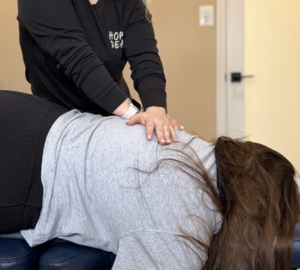
From there, we use gentle, specific adjustments to help bring your system back into balance. We’re not chasing symptoms — we’re helping your nervous system remember how to move between effort and ease. And when your nervous system learns regulation, your baby’s developing system learns it right along with you.
When Should You Start?
The earlier, the better — simply because it gives your body more time to shift out of stress and into safety before birth.
But it’s never too late.
We’ve seen beautiful changes happen in the third trimester, even in the final weeks before labor. Your nervous system is always listening, always adapting, and always capable of healing when it’s supported the right way.
What You Can Control
Pregnancy and birth don’t come with guarantees.
Sometimes medical interventions are necessary, and we are grateful for them when they are.
But no matter how birth unfolds, your nervous system plays a huge role in how you experience it… and how you recover afterward. A regulated nervous system supports smoother recovery, deeper bonding, and greater emotional resilience in those tender postpartum weeks.
You may not be able to control everything —
but you can choose to support the one system that influences all of it.
By caring for your nervous system during pregnancy, you’re giving your baby the gift of learning safety, regulation, and calm before they ever take their first breath.
Your Next Step
There are so many beautiful ways to prepare for birth. Movement, nourishment, breath work, positions, teas, and rituals. All of them matter.
But if we could offer just one foundation beneath it all, it would be this: support your nervous system.
Your baby’s nervous system is being shaped right now, through yours. Every regulated breath, every moment of calm, every release of stored stress is teaching them what safety feels like.
If you’re ready to understand what’s really happening in your nervous system — not just hear that everything “looks fine” — we’d love to walk with you. Reach out to One Family Chiropractic to schedule a consultation. If you’re not local, you can find a like-minded provider through the PX Docs directory.
Our INSiGHT Scans will show you where your body is holding stress…
and our care will help you find the balance and flow you deserve as you prepare to meet your baby.